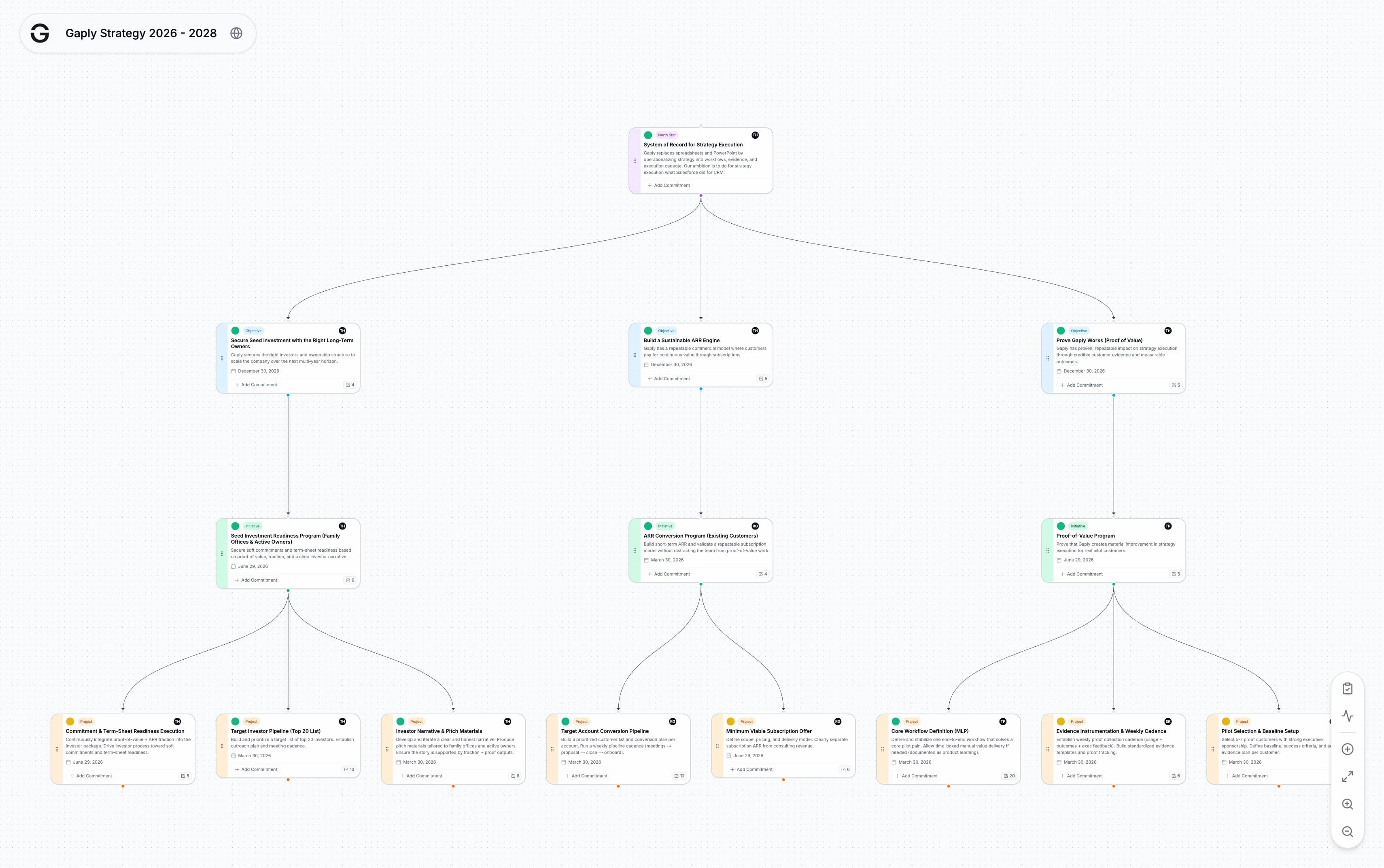
Most design discussions still revolve around interfaces, usability, or customer interaction. Even within enterprise environments, design is often positioned as a layer applied to technology after the operational model has already been decided.
But the most difficult design problems are rarely interface problems.
They are organisational problems.
Before Gaply existed as a platform, many of the underlying principles already existed inside our design process. As a cross-functional collaboration between product and design, we had become increasingly interested in Unit of Flow thinking: the idea that systems function more effectively when work moves through them as the smallest possible complete unit capable of producing measurable progress.
In practice, this meant focusing less on large planning artefacts, layered project structures, or abstract strategic programs, and more on the smallest actionable unit that could still retain:
The goal was not simply to break work into smaller pieces. It was to preserve strategic meaning while reducing organisational friction.
We were originally applying this thinking to organisational design, product strategy, and cross-functional execution through whiteboarding sessions and operational modelling exercises. The focus was not on software features, but on reducing organisational drag:
At the same time, much of the leadership group came from deeply established strategic planning environments, with many stakeholders having spent more than twenty years working in strategy definition, governance, and enterprise planning structures.
This created an interesting tension early in the project.
Initial attempts to connect strategy and execution naturally gravitated toward familiar enterprise patterns: initiatives became bloated epics, execution became decomposed into task hierarchies, and the system increasingly started resembling a traditional project management platform.
The more strategy was translated into project management abstractions, the further it drifted from the strategic intent it was originally meant to preserve.
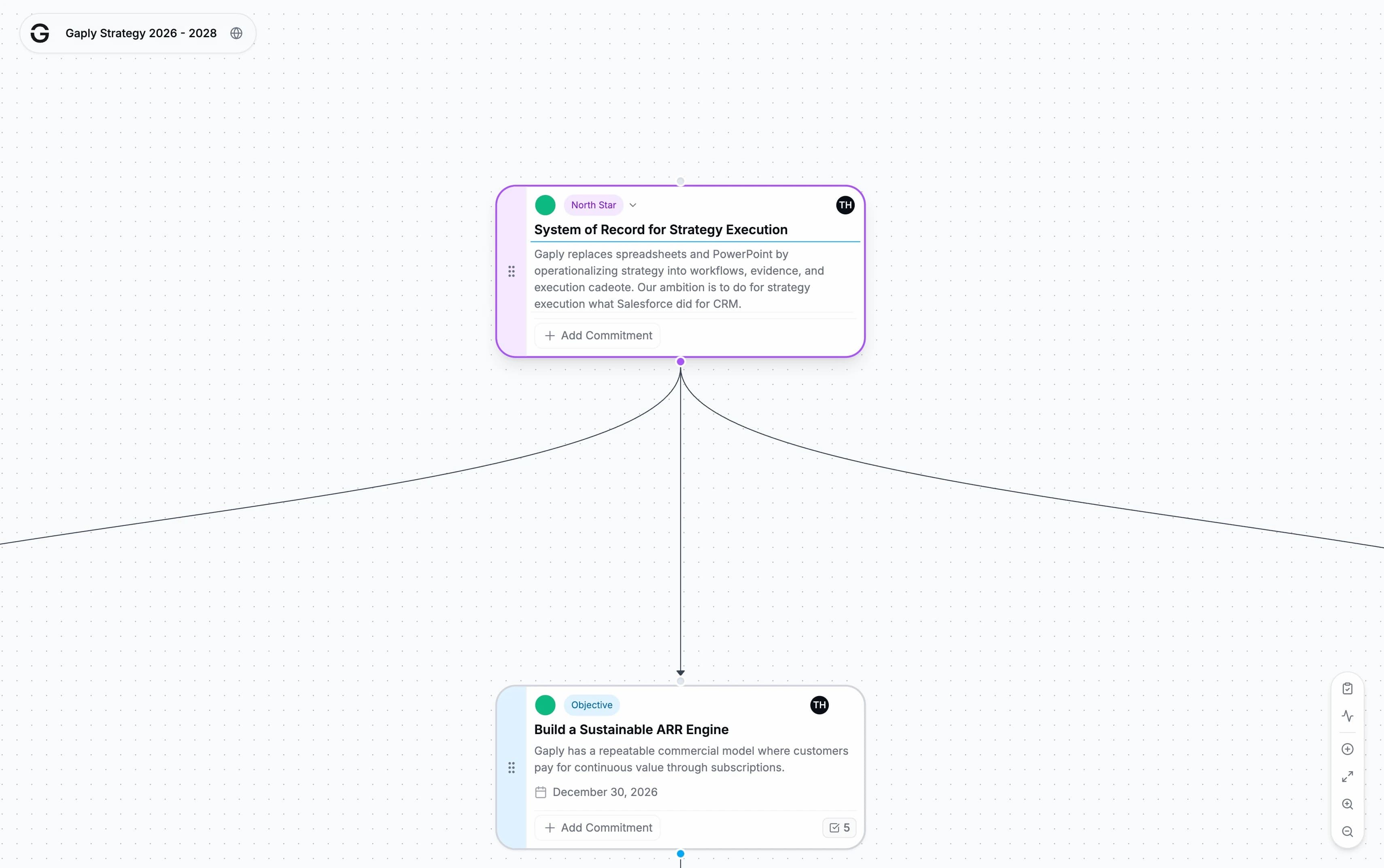
Traditional strategic planning often decomposes goals into initiatives, epics, projects, tasks, and reporting layers until the original strategic intent becomes diluted.
Unit of Flow thinking attempts to stop that degradation by keeping strategy attached to measurable movement as it travels through the organisation.
Instead of creating alignment between strategy and execution, the process often introduced additional operational distance between the two.
This became one of the more important reframing moments in the project.
Rather than asking:
"How do we structure strategic work inside project management systems?"
we started asking:
"What is the smallest possible strategic unit capable of moving through an organisation while still retaining accountability, measurable outcomes, and strategic intent?"
Over time, we recognised that the same flow-based thinking we were using internally could be used to fundamentally reframe how strategic software itself was designed.
Instead of building around documents, reporting layers, or project hierarchies, we began exploring what would happen if strategic software was structured around movement:
The interesting part was that the methodology and the resulting system architecture gradually began converging into the same shape.
One of the major failures inside organisations is that strategy rarely exists in a state capable of movement.
Strategies are usually represented as:
But none of those are operational units. They are representations of intent.
Unit of Flow thinking forced us to approach strategy differently.
Instead of asking:
"How should strategy be documented?"
we started asking:
"What is the smallest possible strategic unit capable of moving through an organisation while still retaining accountability, measurement, and intent?"
That reframing fundamentally changed how we thought about strategic design.
The problem was no longer interface design. It became systems design.
This forced us into aggressive reduction.
Every workshop, model, and process eventually collapsed into a search for the smallest possible executable unit of strategy:
Importantly, this was not framed internally as feature definition. It was a design constraint.
Anything that disrupted flow was removed.
That became one of the more important strategic design decisions of the project: design not as additive expansion, but as systemic reduction.
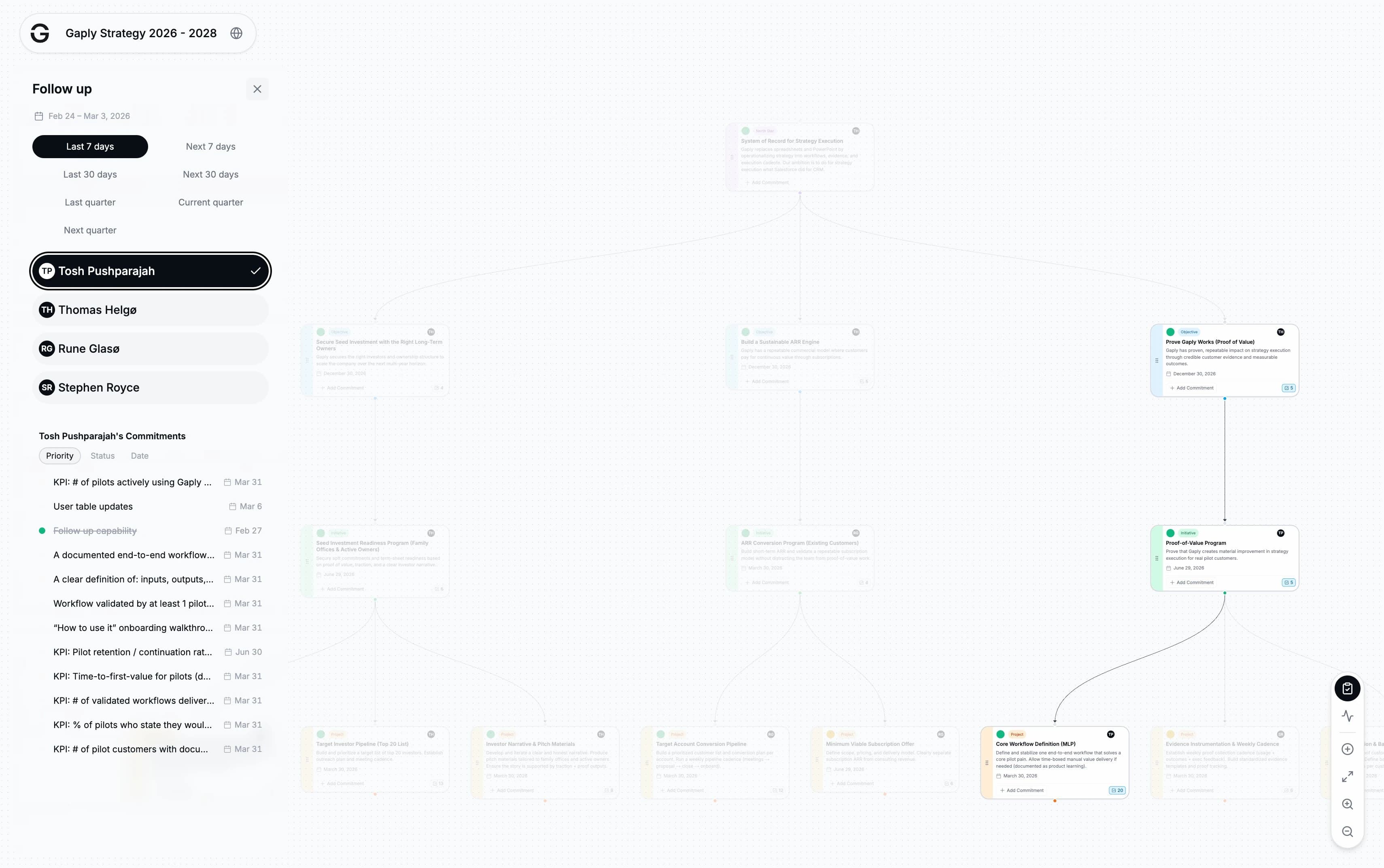
One of the more influential shifts in our thinking came when we stopped treating strategic initiatives as static plans and started treating them as measurable bets intended to influence organisational outcomes.
Within the Unit of Flow framing, strategy only becomes operational if:
This reframed strategic planning from documentation into experimentation.
The question stopped being:
"What are we building?"
and became:
"What measurable outcome are we trying to influence, and what bets are we making to move it?"
A strategic initiative became less about activity and more about assumption validation.
The KPI was no longer treated as reporting metadata attached to work after the fact. It became the operational signal indicating whether a strategic assumption was producing meaningful movement.
This thinking shaped both the platform architecture and the way the product/design group operated internally.
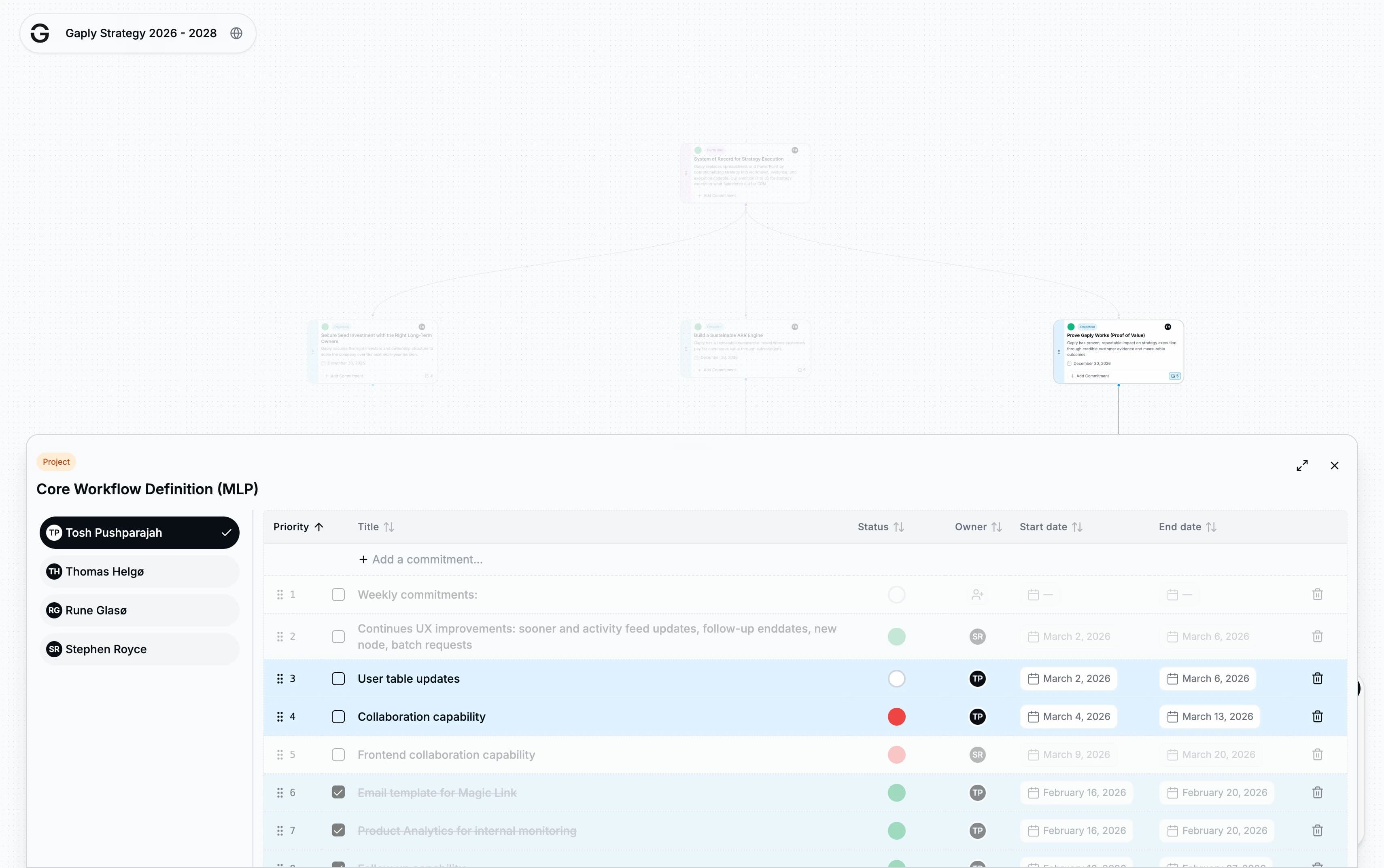
For example, one recurring bet within the team was that forcing ourselves to operate through the same strategic structures internally before release would reduce friction for eventual users.
The desired outcome was lower operational friction. The KPI was whether the system improved clarity, reduced ambiguity, and exposed execution issues earlier in the process.
Dogfooding the system was simply the intervention: a measurable bet intended to improve a defined outcome.
Importantly, this was not treated as startup culture theatre or internal branding. It was simply another strategic assumption subjected to the same flow-based thinking as the rest of the system.
Once we began viewing organisations through flow and measurable bets, many traditional enterprise patterns stopped making sense.
Large approval chains, dense reporting structures, and document-heavy planning systems all optimise for information preservation rather than strategic movement.
But movement requires rhythm.
We became increasingly interested in operational cadence: the recurring moments where a team must confront whether a strategic bet is moving the KPI it exists to influence.
This shifted the role of strategic systems significantly.
Most enterprise systems optimise for information capture and retrospective reporting. We became more interested in intervention systems: structures designed to surface friction, expose strategic drift, and create continuous correction loops before organisational inertia compounds failure.
The purpose of visibility was not observation. It was behavioural correction.
That distinction changed nearly every product and design decision afterward.
Late in the process, we recognised something slightly uncomfortable and unexpectedly revealing.
Internally, the product and design teams had already begun operating through the exact same structures we were encoding into the platform:
Without intentionally planning it, the methodology and the resulting system architecture had started converging into the same model.
The product was no longer simply expressing the strategic design thinking. The product had become evidence that the thinking itself was operationally coherent.
That recursive quality became one of the strongest validation points of the entire project.
The system used to build the platform became structurally similar to the platform itself.
Looking back, the most important shift was understanding that strategic design is not primarily about interface optimisation.
It is about designing the conditions under which organisations can continuously align:
That requires thinking beyond screens and workflows.
It requires treating:
Gaply was ultimately the artefact produced by that way of thinking.
The more important outcome was the operational model underneath it.